
About
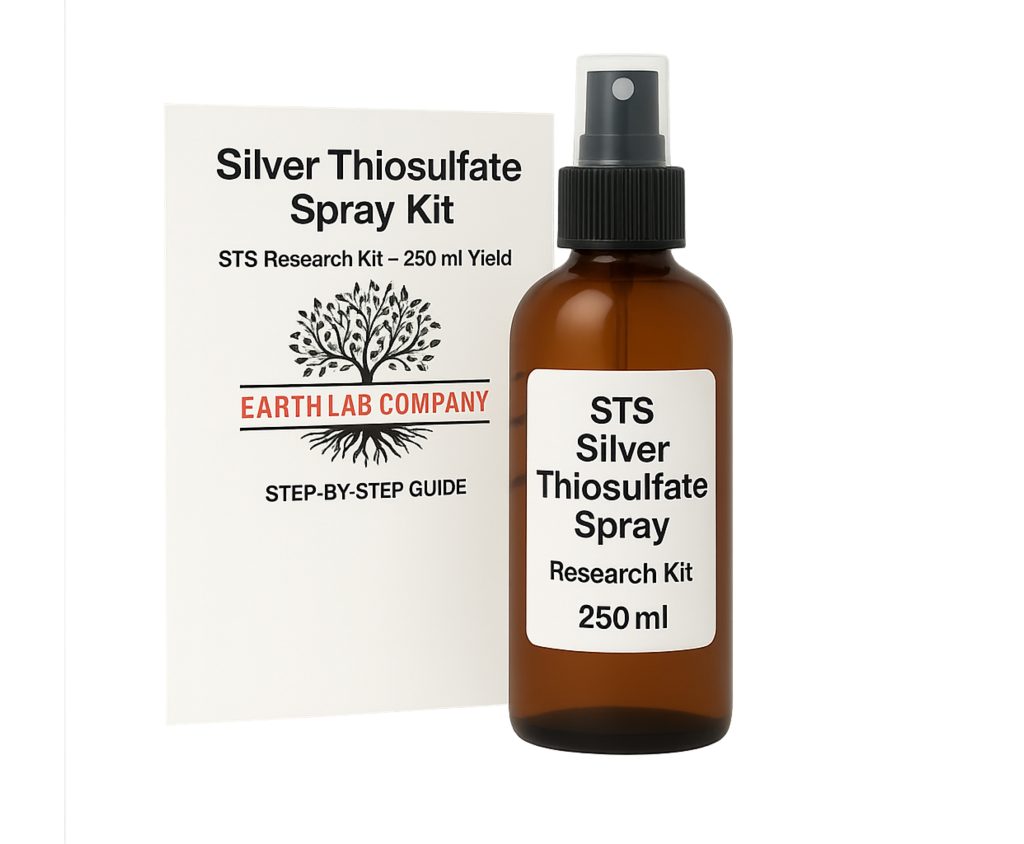
Get ready to unlock a world of discovery with the Silver Thiosulfate (STS) Spray Research Kit—your gateway to groundbreaking research and plant development!
The Silver Thiosulfate (STS) Spray Research Kit is designed for plant enthusiasts, small-scale farmers, and researchers focusing on a wide range of crops, including fruits like tomatoes, cucumbers, and peppers, vegetables such as lettuce and spinach, as well as flowers like cannabis, roses, and chrysanthemums. This easy-to-use kit is perfect for those studying flowering, bloom control, and ethylene responses in various plants, offering valuable insights for optimizing growth and harvest.
You can get your kit from www.takealot.com

Good day. I followed the instructions on the bottle and as a result, some black precipitate has formed in the solution. After researching further, it seems that this is silver sulphate. It appears to me that the silver nitrate powder needs to be dissolved in distilled water first, then added to the sodium thiosulfate solution. Could you provide a comment on why the instructions appear to be incorrect? I am willing to correspond via the email I listed.

Good day,
Thank you for taking the time to share your observations and for providing such detailed feedback. We appreciate the care you took in following the instructions and in researching the chemistry further.
I would like to clarify a few important points regarding the solution you observed.
The black or dark precipitate that can occasionally form during STS preparation is not silver sulphate. Silver sulphate is white and only sparingly soluble in water. The darkening you observed is most commonly associated with elemental silver or silver–sulphur complexes, which can form if silver nitrate is exposed to light, trace contaminants, or localised high concentrations during mixing. Silver nitrate is extremely light-sensitive and can reduce to metallic silver, which appears grey to black.
It is worth noting that this extreme light sensitivity of silver nitrate is a well-known and defining chemical property, and is in fact the same property that historically made silver nitrate and related silver salts fundamental to the development of photographic film and photographic papers. Even brief exposure to light can initiate reduction reactions, which is why strict light control is essential during handling and mixing.
Regarding the preparation method: the instructions supplied with the kit are based on the standard horticultural STS preparation protocol, in which the sodium thiosulfate solution is added directly to the silver nitrate powder. This approach is widely used because sodium thiosulfate rapidly complexes free silver ions, limiting their reactivity once fully mixed. Pre-dissolving the silver nitrate in distilled water is an alternative laboratory method, but it is not strictly required for effective STS formation when clean reagents, correct ratios, and low-light conditions are maintained.
That said, we do recognise that exposure to light, residual moisture or contaminants, or uneven wetting of the powder during the initial mixing phase can increase the likelihood of partial silver reduction, even when instructions are followed correctly. This is why we emphasise low-light handling, gentle swirling (not shaking), and immediate use after mixing.
We genuinely appreciate you bringing this to our attention. Feedback such as yours helps us refine both our documentation and user guidance. We are currently reviewing our instruction wording to see where additional clarification may be helpful for users with a more technical background.
You are very welcome to continue this discussion via email, and we would be happy to review any photographs or additional details you may wish to share.
Good day. I followed the instructions on the bottle and as a result, some black precipitate has formed in the solution. After researching further, it seems that this is silver sulphate. It appears to me that the silver nitrate powder needs to be dissolved in distilled water first, then added to the sodium thiosulfate solution. Could you provide a comment on why the instructions appear to be incorrect? I am willing to correspond via the email I listed.
Good day,
Thank you for taking the time to share your observations and for providing such detailed feedback. We appreciate the care you took in following the instructions and in researching the chemistry further.
I would like to clarify a few important points regarding the solution you observed.
The black or dark precipitate that can occasionally form during STS preparation is not silver sulphate. Silver sulphate is white and only sparingly soluble in water. The darkening you observed is most commonly associated with elemental silver or silver–sulphur complexes, which can form if silver nitrate is exposed to light, trace contaminants, or localised high concentrations during mixing. Silver nitrate is extremely light-sensitive and can reduce to metallic silver, which appears grey to black.
It is worth noting that this extreme light sensitivity of silver nitrate is a well-known and defining chemical property, and is in fact the same property that historically made silver nitrate and related silver salts fundamental to the development of photographic film and photographic papers. Even brief exposure to light can initiate reduction reactions, which is why strict light control is essential during handling and mixing.
Regarding the preparation method: the instructions supplied with the kit are based on the standard horticultural STS preparation protocol, in which the sodium thiosulfate solution is added directly to the silver nitrate powder. This approach is widely used because sodium thiosulfate rapidly complexes free silver ions, limiting their reactivity once fully mixed. Pre-dissolving the silver nitrate in distilled water is an alternative laboratory method, but it is not strictly required for effective STS formation when clean reagents, correct ratios, and low-light conditions are maintained.
That said, we do recognise that exposure to light, residual moisture or contaminants, or uneven wetting of the powder during the initial mixing phase can increase the likelihood of partial silver reduction, even when instructions are followed correctly. This is why we emphasise low-light handling, gentle swirling (not shaking), and immediate use after mixing.
We genuinely appreciate you bringing this to our attention. Feedback such as yours helps us refine both our documentation and user guidance. We are currently reviewing our instruction wording to see where additional clarification may be helpful for users with a more technical background.
You are very welcome to continue this discussion via email, and we would be happy to review any photographs or additional details you may wish to share.